Science & techIssue Worlds 2026 Swiss stage: DK beat T1 to go 2-0. How does this year's Worlds work?
Q. What do Bo1, Bo3 and Bo5 mean, and which format produces more upsets?
At the 2026 League of Legends World Championship, Dplus KIA beat three-time defending champion T1 in round two of the Swiss stage, where teams with the same record face each other, to go 2–0. Coverage of the match is full of shorthand like Bo1 and Bo3, and from round three some matches grow from one game to three. What do Bo1, Bo3 and Bo5 actually mean, and which format produces more upsets?
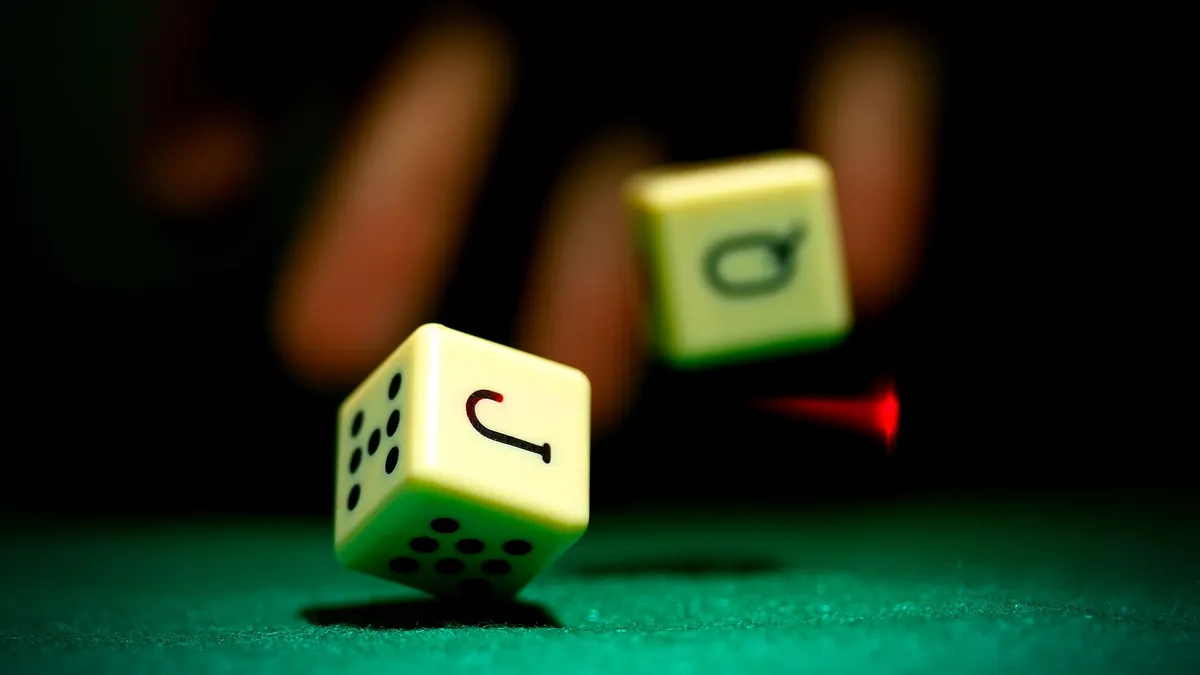
The short answer: Bo stands for “best of,” and the number is the longest a series of games can run. Bo1 is a single game, Bo3 is first to two wins, Bo5 first to three and Bo7 first to four. A team that is even slightly better in each game wins more often the longer the series runs, so upsets are most common in a single game.
What do Bo1, Bo3, Bo5 and Bo7 mean?
“Best of three” means whoever wins the majority of three games wins the series, so it ends the moment one side has two wins. A Bo3 that goes 2–0 never reaches game three.
| Format | Wins needed | Most games | Where you see it |
|---|---|---|---|
| Bo1 | 1 | 1 | Worlds 2026 Swiss stage, rounds 1 and 2 |
| Bo3 | 2 | 3 | Worlds Swiss matches that decide advancement or elimination |
| Bo5 | 3 | 5 | Worlds 2026 knockouts, quarterfinals to final (expected) |
| Bo7 | 4 | 7 | MLB (Major League Baseball) World Series, NBA Finals |
According to MLB.com, the World Series has been best-of-seven every year since 1922; the first one, in 1903, and the series of 1919 to 1921 were best of nine. The NBA Finals are best-of-seven too.
How much does a Bo3 help the stronger team?
Take a team that wins 60% of its games against a given opponent. That number is an example for the math, not a rating of any real team. In a Bo1, its chance of winning is simply 60%.
In a Bo3 it has two ways to win. It can sweep 2–0, which happens 0.6 × 0.6 = 0.36 of the time. Or it can split the first two games and win the third. A 1–1 split can happen in two orders, win-loss or loss-win, so that path is worth 2 × 0.6 × 0.4 × 0.6 = 0.288. Add them up and you get 0.648, or 64.8%, up from 60%.
For longer series, one trick helps. Imagine the teams always play every game, even after the series is decided. The winner never changes, so winning a Bo5 is the same as winning at least three of five games. In plain words: for each way of winning a majority of the games, multiply the number of possible win-loss orders by the single-game win chance once per win and by the loss chance once per loss, then add it all up. For a Bo5 at 60%, exactly three wins out of five comes to 0.346, four to 0.259 and five to 0.078, which adds up to about 68.3%.
| Stronger team wins one game | Bo1 | Bo3 | Bo5 | Bo7 |
|---|---|---|---|---|
| 55% | 55.0% | 57.5% | 59.3% | 60.8% |
| 60% | 60.0% | 64.8% | 68.3% | 71.0% |
| 70% | 70.0% | 78.4% | 83.7% | 87.4% |

Which format produces more upsets?
The chance of an upset is whatever is left over. For the 60% team, the weaker side takes 40.0% of single games, 35.2% of Bo3s, 31.7% of Bo5s and 29.0% of Bo7s. The shorter the series, the more upsets, and a single game produces the most.
Kyle Siegrist’s probability text at the University of Alabama in Huntsville reaches the same result: the more games a series has, the more it favors the side with the better single-game chance. With more games, one lucky game carries less weight.
The returns shrink, though. For the 60% team, going from Bo1 to Bo3 adds 4.8 percentage points, but going from Bo5 to Bo7 adds less than 3. And series length can only stretch a gap, not create one: if both teams win 50% of single games, every format is a coin flip. Even a 70% team still loses a Bo7 about one time in eight (12.6%).
Do real matches follow the math?
These numbers rest on two assumptions: games do not affect each other, and the stronger team’s chance stays the same in every game. Real series bend both. Siegrist’s text itself asks readers to judge whether those assumptions hold in sports that mix skill with chance.
Teams adapt after seeing an opponent’s plan in game one. Long series wear players down, and one result can shift the mood of the next game. Rules change the conditions too. Under Riot Games’ Fearless Draft, a champion (playable character) picked in an earlier game of a series becomes unavailable to both teams for the rest of it, and Wikipedia lists it as expected for every Bo3 and Bo5 at Worlds 2026.
So read the table as a gauge of which way, and roughly how hard, series length pushes a result, not as real win rates.
Why does Worlds 2026 start with single games?
Sixteen teams play up to five rounds in the Swiss stage. Three wins send a team to the knockout stage, where eight teams go through, and three losses send it home. Rounds one and two are all Bo1. From round three, any match that decides advancement or elimination is a Bo3: 2–0 teams meet in a Bo3, and so do 0–2 teams, while 1–1 teams play another single game.
The math suggests why. In a Swiss format, one loss does not end your tournament, so an early single-game defeat can still be repaired. A match between two 2–0 teams is different: the winner goes straight through, just as the loser of a match between 0–2 teams goes home. Stretching those matches to three games keeps one mistake or one lucky play from deciding a whole tournament; our 60% team’s chance rises to 64.8%. Single games also keep the schedule short. Round one’s eight matches were all played on October 23 (US time); as Bo3s, they could have needed up to 24 games.
The eight teams that go through then play best-of-five series from the quarterfinals to the final, which is set for November 14 at Barclays Center in Brooklyn, New York.
In short
Bo3 means best of three: the first team to two wins takes the series, while Bo1 is a single game and Bo7 is first to four. A stronger team gains a little with every extra game, so upsets are most common in a Bo1. That is also a good way to read the Worlds 2026 Swiss stage, which saves its best-of-threes for the matches that send teams through or home.
More from this issue
 Worlds 2026 Swiss stage: DK beat T1 to go 2-0. How does this year's Worlds work?
 What is the Swiss stage at Worlds, and why is it called Swiss?
 What is Fearless Draft in League of Legends, and why can't teams pick a champion twice?
 What does the Elder Dragon do in League of Legends?
 League of Legends World Championship winners: who has won Worlds since 2011?
People also ask
What does Bo5 mean?
Best of five: the first team to win three games takes the series, so it lasts three to five games. At Worlds 2026, every knockout series from the quarterfinals to the final is expected to be a Bo5.
How many games are in a best-of-seven series?
Four to seven. The first team to win four games takes the series, and any remaining games are not played. The World Series and the NBA Finals are both best-of-seven.
Why are 1–1 matches in the Worlds Swiss stage only one game?
Because a 1–1 match can neither send a team through nor knock it out. At Worlds 2026, only Swiss-stage matches that decide advancement or elimination are best-of-three; the rest are best-of-one.
Sources
- Wikipedia - 2026 League of Legends World Championship
- LoL Esports - Fearless Draft Takes Over 2025 (2025)
- Kyle Siegrist, Random (University of Alabama in Huntsville) - The Negative Binomial Distribution
- MLB.com - How many games are in the World Series? (2020)
- NBA.com - Coast-to-coast Finals matchup brings attention back to old 2-3-2 format (2022)