History & cultureIssue Worlds 2026 Swiss stage: DK beat T1 to go 2-0. How does this year's Worlds work?
Q. What is the Swiss stage at Worlds, and why is it called Swiss?
The 2026 League of Legends World Championship is in its Swiss stage, and since Dplus KIA (DK) beat T1 for a second straight win, the coverage has been full of records like “2-0” and “one win from the knockout stage.” The event is in the United States, yet the stage is named after Switzerland. So what exactly is the Swiss stage, and why is it called Swiss?
The short answer: the Swiss stage pairs teams with the same record every round, sends a team through the moment it reaches three wins, and eliminates it the moment it reaches three losses. The name comes from the Swiss system, a pairing method first used at a chess tournament in Zürich in 1895.

What is the Swiss system?
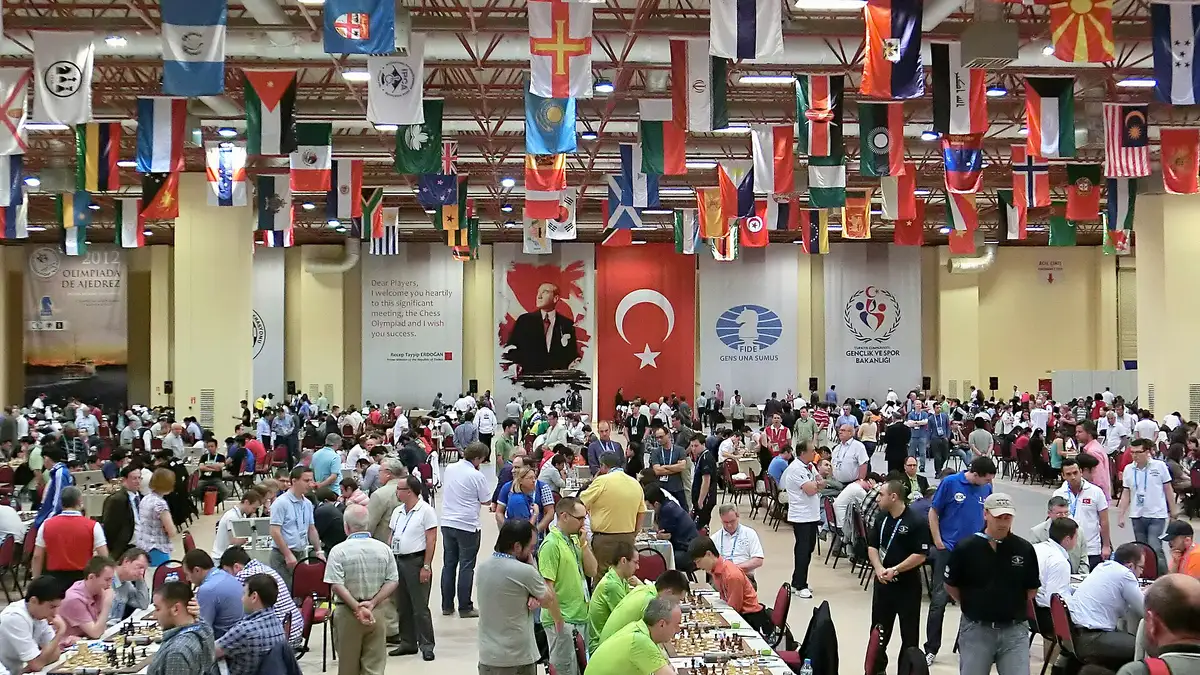
The Swiss stage is the part of Worlds played under the Swiss system, a pairing method that comes from chess. There are two classic ways to run a big event. A knockout bracket is quick, but one bad day ends your run. A round robin, where everyone plays everyone, is thorough but balloons fast: 16 teams need 120 matches.
The Swiss system sits in between. Under FIDE’s basic rules, the number of rounds is fixed in advance, players are generally paired with others on the same score, and no two players meet more than once. Winners meet winners and losers meet losers, so the field sorts itself by strength and one loss never ends anyone’s tournament. In chess, usually nobody is eliminated at all; everyone plays every round and the standings go by points.
Worlds adds a stopping rule. A team that reaches three wins goes straight to the knockout stage, the single-elimination bracket that starts at the quarterfinals, and a team that reaches three losses goes home. Every team plays three to five matches and finishes on exactly three wins or three losses.
How does the Worlds Swiss stage format work?
In 2026, 16 teams play up to five rounds: eight advance with three wins and eight go out with three losses. Rounds 1 and 2 are best-of-one (Bo1), a single game. From round 3, any match that can send a team through or knock it out is best-of-three (Bo3), first to two wins; only round 3’s 1-1 matchups stay best-of-one. So every advancement and every elimination is decided in a best-of-three.
Round 1 is drawn by seeding, with no same-region matchups. From round 2, teams with the same record are drawn against each other; rematches are not allowed, but same-region matchups are. Because teams only meet teams on the same record, the number of teams on each record is fixed:
| Record | Teams | Next match | What’s at stake |
|---|---|---|---|
| 1-0, 0-1 | 8, 8 | Bo1 | Nothing decided yet |
| 2-0 | 4 | Bo3 | Win to advance at 3-0 |
| 1-1 | 8 | Bo1 | Nothing decided yet |
| 0-2 | 4 | Bo3 | Lose and go out at 0-3 |
| 2-1 | 6 | Bo3 | Win to advance at 3-1 |
| 1-2 | 6 | Bo3 | Lose and go out at 1-3 |
| 2-2 | 6 | Bo3 | Win to advance, lose to go out |
| 3-0, 3-1, 3-2 | 2, 3, 3 | Quarterfinals | Through (8 teams) |
| 0-3, 1-3, 2-3 | 2, 3, 3 | None | Out (8 teams) |
Why is it called the Swiss system?
Because it was born in Switzerland. According to ChessBase, it was devised by Dr. Julius Müller (1857–1917), a teacher in Brugg, near Zürich, and its official birth date is usually given as 15 June 1895, at the fifth Swiss chess tournament in Zürich. A history of the Zürich chess club says Müller tried a “beta version” at the first Swiss tournament in 1889, so some date it earlier.

The problem it solved was crowding. Chess boomed in the late 19th century, and that 1889 event alone drew 74 players; a round robin would have meant 73 games each. Müller’s system let everyone play the whole event on a fixed schedule. So “Swiss” names where it came from, not how it works.
When did Worlds switch to a Swiss stage, and why?
Worlds has used the Swiss stage since 2023. Before that, it opened with groups: in 2022, 16 teams played in four groups of four, each a double round robin of single games, and the top two in each group advanced.
Announcing the change in January 2023, Riot Games said it wanted every game at Worlds to have stakes and to minimize elimination games that don’t affect the outcome for both teams. It also wanted to give teams that start poorly a way back and to create more best-of series and cross-regional matches. In a group, a team that has already qualified or been knocked out still plays out its schedule. In a Swiss stage, a team stops the moment it reaches three wins or three losses, so every remaining match involves two teams whose fate is still open.
Worlds is not alone. FIDE’s Chess Olympiad, a team event between national federations, is played over 11 Swiss rounds, and Counter-Strike 2 Majors use 16-team Swiss stages with the same three-wins, three-losses rule. UEFA (Union of European Football Associations) even described its 2024/25 Champions League revamp as the so-called “Swiss system,” though there opponents are drawn in advance, not paired round by round.
Where does the Worlds 2026 Swiss stage stand now?
Worlds 2026, the 16th edition, runs in the United States (US dates):
| Stage | Dates | Venue |
|---|---|---|
| Swiss stage | 23–31 October | Credit Union of Texas Event Center, Allen, Texas |
| Quarterfinals and semifinals | 3–8 November | Same arena in Allen |
| Final | 14 November | Barclays Center, Brooklyn, New York |
As of 25 October (Korea time), two rounds are done. Gen.G, Dplus KIA, LYON and Movistar KOI are 2-0, one win from the knockout stage. T1, champions of the last three Worlds (2023–2025), and Hanwha Life Esports are 1-1.
In round 2, the four LCK (Korea) teams, all 1-0, were drawn against one another, since same-region matchups are ruled out only in round 1. Gen.G beat Hanwha Life, and DK’s best-of-one against T1 ran about 41 minutes. T1 led for most of the game and took Baron (Baron Nashor, a big neutral monster that powers up whoever slays it), but late on DK won a teamfight at the Elder Dragon, a key late-game objective, and pushed straight to T1’s Nexus, the base structure whose fall ends the game. Kills finished 10–8.
In round 3, the 2-0 teams play each other in best-of-three series: the two winners go through at 3-0, and the losers drop to 2-1. The 1-1 teams, T1 and Hanwha Life among them, play best-of-one.
In short
The Swiss stage pairs teams with the same record every round: three wins and you’re through, three losses and you’re out. The name comes from a chess pairing system first used in Zürich in 1895. Worlds has used it since 2023, and in 2026 the eight teams that reach three wins go on to the quarterfinals.
More from this issue
 Worlds 2026 Swiss stage: DK beat T1 to go 2-0. How does this year's Worlds work?
 What do Bo1, Bo3 and Bo5 mean, and which format produces more upsets?
 What is Fearless Draft in League of Legends, and why can't teams pick a champion twice?
 What does the Elder Dragon do in League of Legends?
 League of Legends World Championship winners: who has won Worlds since 2011?
People also ask
When is the Worlds 2026 Swiss stage?
From 23 to 31 October 2026 (US dates) at the Credit Union of Texas Event Center in Allen, Texas. The eight teams that reach three wins play the quarterfinals and semifinals at the same arena from 3 to 8 November, and the final is on 14 November at Barclays Center in Brooklyn, New York.
Does a 2-0 team qualify from the Swiss stage?
Not yet: a team needs three wins. In round 3 the 2-0 teams play each other in best-of-three series. The winners go through at 3-0, and the losers drop to 2-1 and try again in round 4. A 2-0 team needs only one win from its next three matches.
How is the Swiss stage different from a group stage?
In a group stage, each team plays a fixed set of opponents in its group and the table decides who goes through. The Swiss stage has no groups: each round, teams with the same record are paired up, and a team's run ends the moment it reaches three wins or three losses. Worlds used groups through 2022 and switched to the Swiss stage in 2023.
Sources
- ChessBase - 125 years Swiss System (17 Jun 2020)
- FIDE Handbook - C.04.1 Basic rules for Swiss Systems
- LoL Esports - State of the Game: LoL Esports in 2023 (10 Jan 2023)
- Wikipedia - 2026 League of Legends World Championship
- UEFA - UEFA approves final format and access list for its club competitions as of the 2024/25 season (10 May 2022)