Mind & brainIssue Misiorowski's 103.5 mph first pitch: what World Series record did he break?
Q. Average human reaction time: how do batters hit a 100 mph fastball?
Jacob Misiorowski opened the World Series with a 103.5 mph first pitch, and Tampa Bay’s Yandy Díaz let it sail high for a ball. Could anyone hit a pitch like that just by watching it? So what is the average human reaction time, and how do batters hit a 100 mph fastball?
The short answer: the average simple reaction time is about 0.2 seconds to a light and about 0.16 seconds to a sound. A 103.5 mph pitch reaches the plate in under 0.4 seconds, so batters cannot simply watch and react. They predict from the pitcher’s motion and roughly the first 0.15 seconds of flight.

What is the average human reaction time?
Reaction time is the delay between a signal and the start of your response. One signal with one response, such as pressing a button when a light comes on, is simple reaction time.
A literature review by Robert Kosinski of Clemson University gives long-accepted college-age averages of about 190 milliseconds (ms) for light, 160 ms for sound and 155 ms for touch. A 2015 study of 1,469 adults aged 18 to 65 found 213 ms for light once the delay added by the monitor and mouse was removed.
Sound may win because its signal reaches the brain sooner: 8 to 10 ms versus 20 to 40 ms for light, by classic estimates. Vibration moves the ear’s sensory hair cells directly, while the retina needs a chain of chemical steps to turn light into a nerve signal. From there the brain decides “now” and sends a command down the spinal cord.
Why does choosing between signals slow you down?
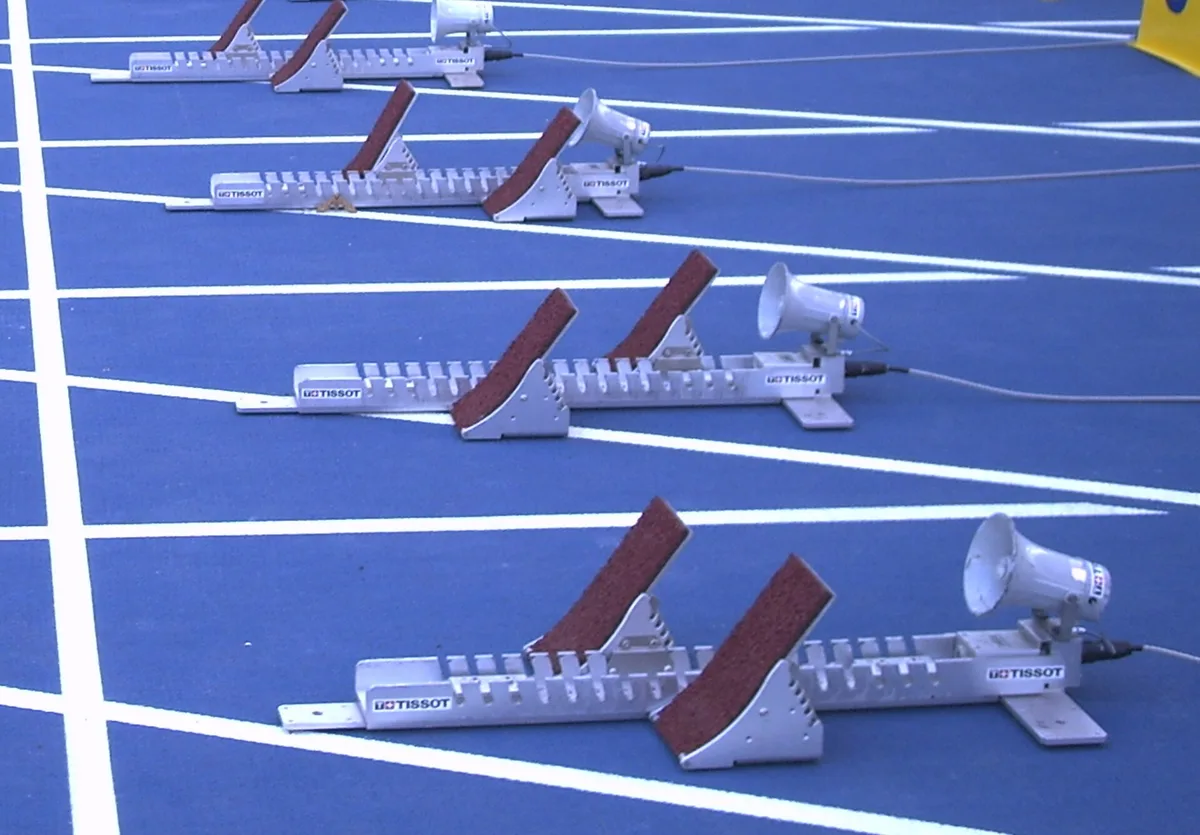
In a recognition task you respond only to certain signals, such as pressing only for red; in a choice task each signal has its own response, such as the left hand for a light on the left. The reaction-time pioneer Donders showed in 1868 that simple reactions are fastest, choice reactions slowest and recognition in between, and Laming (1968) put simple reactions at about 220 ms and recognition reactions at about 384 ms.
Another study found that pressing the key took the same time in every task, so the extra time is the brain sorting out the signal. A batter who must swing at strikes and take balls is doing a recognition task.
Why do online reaction time tests read slower?
An online test will probably score you slower than 190 ms, and not only because of you. A 60 Hz screen draws a new frame about every 17 ms, so a signal can appear up to a frame late, and the mouse and software need time to register your click. The 2015 study notes that hardware and software can inflate measured reaction times by up to 100 ms.
Method matters too: NCAA (National Collegiate Athletic Association) Division I football players in one study averaged 203 ms catching a falling stick but 268 ms on a computer test. A slower score on a website does not necessarily mean your reactions are slow. To compare scores, use one device and average several tries.
Do age and sleep change your reaction time?
Both do. Kosinski’s review says simple reaction time improves into the late 20s, slows gradually through the 50s and 60s, then slows faster after 70. The change is small: about 0.55 ms a year between 18 and 65 in the 2015 study, roughly 0.02 seconds from age 20 to 60, though studies find bigger age gaps on complex tasks.
Sleep matters more. In a 2000 University of New South Wales study, 39 people kept awake were compared with their own scores after measured doses of alcohol. After 17 to 19 hours awake, some tests were as bad as or worse than at a blood alcohol concentration of 0.05%, with responses up to 50% slower. Practice helps: three weeks of it shortened visual reaction time in one study, and the gain lasted at least three more weeks.
How do batters hit a 103.5 mph fastball?
Back to that first pitch. At 103.5 mph (166.6 km/h) a ball travels about 152 feet (46.3 m) per second. Pitchers stride forward from the rubber, which sits 60 feet 6 inches (18.44 m) from home plate, so take 55 feet (16.8 m) from release to batter: 55 ÷ 152 ≈ 0.36 seconds. With air drag slowing the ball slightly, about 0.38 seconds is a fair estimate.
| What happens | Time | Note |
|---|---|---|
| Press a key at a sound | about 0.16 s | Simple reaction, college-age average |
| Press a key at a light | about 0.19 s | Simple reaction, college-age average |
| Press only for the right signal | about 0.38 s | Recognition reaction (Laming, 1968) |
| Swing the bat | 0.15–0.2 s | From swing start to the hitting zone |
| 103.5 mph pitch, release to plate | about 0.38 s | Our estimate, 55 ft (16.8 m) |
A review in the journal of the Society for American Baseball Research (SABR) puts the swing itself at 0.15 to 0.2 seconds, so the bat has to start about 0.2 seconds after release. That is as long as a simple reaction to a light, and by then the ball has covered nearly 30 feet, more than half the way. On these numbers, a batter who starts reacting only after the ball leaves the hand would be too late.
Nor can batters watch it all the way. In Bahill and LaRitz’s 1984 experiment, a major leaguer tracked an approaching ball accurately to about 5.5 feet in front of him; the other subjects lost it at about 9 feet. In the last 10 feet the ball sweeps across the view at over 400 degrees per second, too fast for smooth eye tracking. So batters follow it mainly with the head, then send the eyes ahead. In a study of six Japanese professional batters, the eyes made a predictive saccade, a quick jump, to the contact point 80 to 220 ms before impact; in a study of nine college batters, such jumps came on every pitch.
The key information comes early. In a 2016 study of 10 college players, blocking vision from 0.15 seconds after release left the average contact point unchanged (only precision in one direction slipped), while hiding the last 0.15 seconds made no difference. The SABR review says batters predict most of the trajectory very early, also using the pitcher’s motion before release. Their edge is less a fast hand than a brain that has already worked out where the ball is going.
This article is general science information and does not replace a medical diagnosis.
In short
Simple reaction time averages about 0.2 seconds to light and 0.16 seconds to sound, and about 0.38 seconds when you must pick out the right signal. A 103.5 mph pitch arrives in under 0.4 seconds, so batters hit it by predicting from the pitcher’s motion and the ball’s early flight, not by reacting.
More from this issue
 Misiorowski's 103.5 mph first pitch: what World Series record did he break?
 How do you convert mph to km/h, and what is 100 mph in km/h?
 Why is it called the World Series if only North American teams play?
 How is pitch speed measured: radar gun or Statcast?
 What is Tommy John surgery, and why do hard throwers need it?
People also ask
Is a reaction time test score of 250 to 300 ms slow?
Not necessarily. Computer and phone tests add delay from the screen, the input device and the software, so they record slower times than your true reaction. NCAA Division I football players averaged 0.203 seconds catching a falling stick but 0.268 seconds on a computer test.
Can you improve your reaction time?
To a degree. One study found that three weeks of practice shortened reaction time to a visual signal, and the gain lasted at least three more weeks. Sleep loss works the other way: after 17 to 19 hours awake, people in one study did some tests as badly as at a 0.05% blood alcohol level.
Do MLB hitters have much faster reactions than everyone else?
Students with more baseball experience have been found to react faster to baseball-specific stimuli. But nobody can simply react to a 100 mph fastball; a hitter's real edge is predicting where the ball will go from the pitcher's motion and the first part of its flight.
Sources
- Robert J. Kosinski (Clemson University) - A Literature Review on Reaction Time (2013)
- Woods et al. (2015), Factors influencing the latency of simple reaction time - Frontiers in Human Neuroscience
- Williamson & Feyer (2000), Moderate sleep deprivation produces impairments in cognitive and motor performance equivalent to legally prescribed levels of alcohol intoxication - Occupational and Environmental Medicine (PMC)
- SABR Baseball Research Journal - Fogt & Clutter (2024), Do Baseball Batters Keep Their Eye on the Ball?
- Higuchi et al. (2016), Contribution of Visual Information about Ball Trajectory to Baseball Hitting Accuracy - PLOS ONE (PMC)