Science & techIssue Misiorowski's 103.5 mph first pitch: what World Series record did he break?
Q. How do you convert mph to km/h, and what is 100 mph in km/h?
Jacob Misiorowski opened the 2026 World Series with a 103.5 mph first pitch, and Korean headlines reported the very same pitch as 166.6 km/h. Same ball, two numbers. So how do you convert mph to km/h, and how fast is 100 mph in kilometers per hour?
The short answer: a mile is exactly 1.609344 kilometers, so you multiply mph by 1.609344 to get km/h, which makes 100 mph about 160.9 km/h. Misiorowski’s 103.5 mph comes out at 166.567…, which rounds to the 166.6 km/h in the Korean reports. Without a calculator, multiplying by 1.6 gets you within about 0.6%.
What does mph mean, and how is it different from km/h?
Mph stands for miles per hour: how many miles you would cover in one hour at that speed. Km/h, kilometers per hour, is the same idea measured in kilometers. Both are distance divided by time, so converting takes only the ratio between a mile and a kilometer.
That ratio is 1.609344. The conversion tables of the US National Institute of Standards and Technology (NIST) list 1 mile as 1.609344 km and 1 mph as 1.609344 km/h, and flag both factors as exact rather than rounded. Unlike Celsius and Fahrenheit, the two speed units share the same zero, so one multiplication does the job.
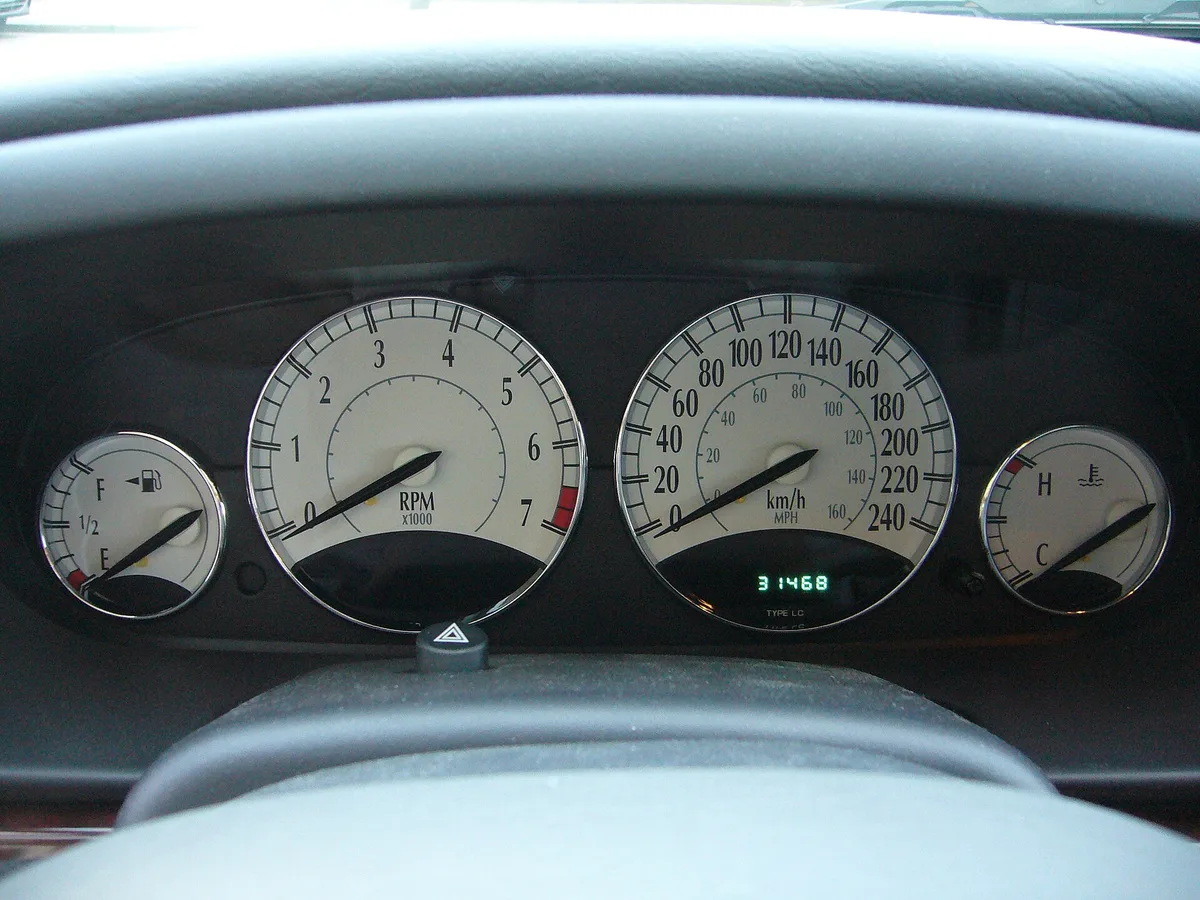
How do you convert mph to km/h?
There are only two formulas:
- mph to km/h: km/h = mph × 1.609344
- km/h to mph: mph = km/h ÷ 1.609344 (the same as × 0.621371)
So 60 mph is 60 × 1.609344 = 96.56 km/h, and 70 mph is 112.65 km/h. Going the other way, 100 km/h, the standard limit on South Korean expressways with two or more lanes each way, is 100 ÷ 1.609344 = about 62.1 mph.
No calculator? Take the mph number, add half of it, then add a tenth of it. For 100 mph that is 100 + 50 + 10 = 160 km/h. Adding a half and a tenth is the same as multiplying by 1.6, which lands about 0.6% below the exact 160.9. For Misiorowski’s pitch, 103.5 + 51.75 + 10.35 = 165.6 km/h, about 1 km/h short of the exact 166.6.

To go from km/h to mph, divide by 1.6. Multiplying by 0.6 is a popular shortcut too, but it runs about 3% low, turning 100 km/h into 60 mph instead of 62.1. For distances, neighboring Fibonacci numbers (1, 1, 2, 3, 5, 8, 13…, each the sum of the two before it) make handy pairs: 5 miles is about 8 km (8.05) and 8 miles about 13 km (12.87), because the ratio between neighbors hovers around 1.6.
What is 100 mph in km/h, and how do other common speeds convert?
Here are speeds you will run into, rounded to one decimal place (the two Korean figures were converted from km/h). UK limits are GOV.UK’s figures for cars.
| Speed | mph | km/h |
|---|---|---|
| UK built-up area limit (outside Wales) | 30 | 48.3 |
| UK single carriageway limit | 60 | 96.6 |
| South Korea’s standard expressway limit | about 62.1 | 100 |
| UK motorway limit | 70 | 112.7 |
| Highest US posted limit (parts of Texas SH 130) | 85 | 136.8 |
| First 160 km/h pitch by a Korean pitcher (KBO, 2023) | about 99.5 | 160.1 |
| 100 mph | 100 | 160.9 |
| Chapman’s World Series mark (2016) | 103.2 | 166.1 |
| Misiorowski’s Game 1 first pitch (2026) | 103.5 | 166.6 |
The row to watch is 100 mph. A “triple-digit” fastball is the headline number in American baseball, and in km/h it sits at 160.9. In Korea the milestone is the round 160 km/h. When Hanwha Eagles pitcher Moon Dong-ju became the first Korean pitcher to pass it on the KBO league’s official tracking in April 2023, at 160.1 km/h, Korea’s CBS Nocut News wrote that the “100-mile era” was not far off. His pitch was about 99.5 mph, half a mile per hour short.
Why is a mile exactly 1.609344 km?
The mile goes back to Rome. According to Britannica, it comes from the Latin mille passus, “a thousand paces,” which measured 5,000 Roman feet. An English statute of 1593 under Elizabeth I stretched it to 5,280 feet, the number still in use.
The exact lengths of the foot and the yard, though, differed by tiny amounts between countries, which mattered to makers of precision tools and instruments. So from July 1, 1959, the US National Bureau of Standards (now NIST) adopted a yard of exactly 0.9144 meter, shortening the American yard by just 2 parts in a million, in step with the national standards laboratories of the UK, Canada, Australia, New Zealand and South Africa. A mile is 1,760 yards, and 1,760 × 0.9144 = 1,609.344 meters. Since then the mile has been defined through the meter, which is why the factor is exact.
One exception lingered: American land surveys kept an older “US survey foot,” which made a mile about 1.609347 km, roughly 3 millimeters longer. NIST set December 31, 2022 as the last day to use it, so since 2023 the international foot is the standard outside legacy records.
Who still uses mph, and why does baseball use it?
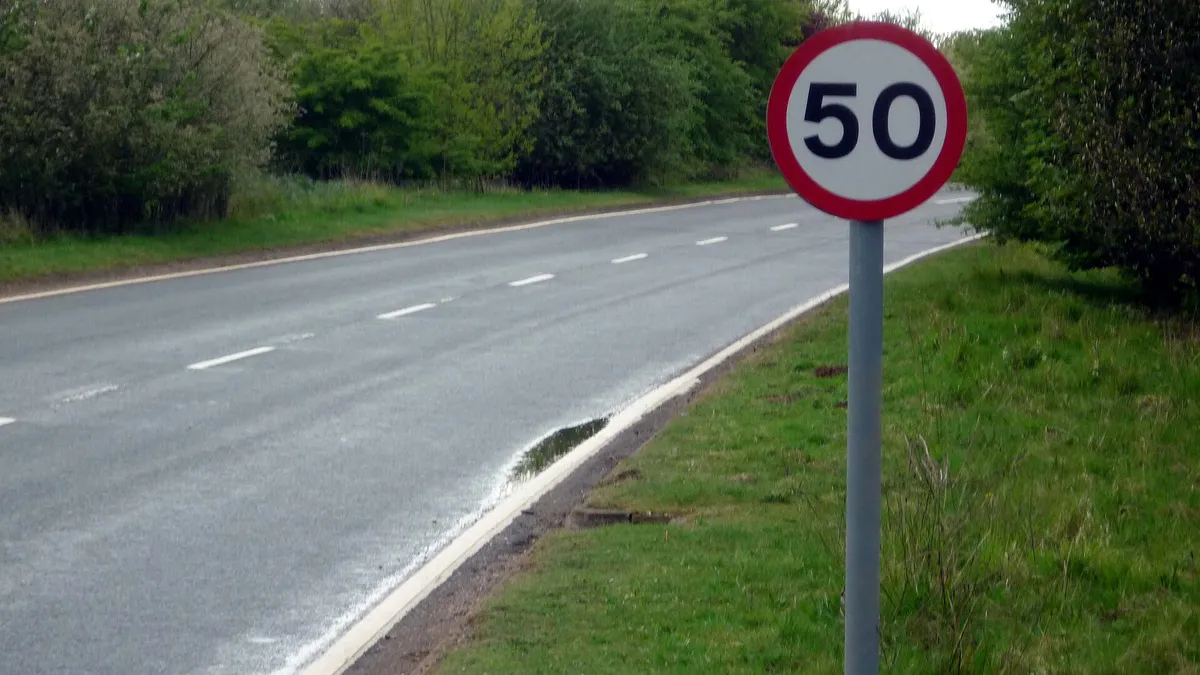
The best-known mph countries are the United States and the United Kingdom. US states set their speed limits in mph; according to the Insurance Institute for Highway Safety (IIHS), the highest is 85 mph (about 136.8 km/h) on toll sections of State Highway 130 in Texas. British roads run on mph too, and the government’s speed limit page gives km/h only in brackets. In built-up areas, Wales sets 20 mph where England sets 30.
Baseball follows the American habit. Major League Baseball measures and announces pitch speed in mph, and MLB’s own glossary lists “mph” among the words broadcasters use for velocity. Korea’s KBO records official pitch speeds in km/h, so Korean outlets turned Misiorowski’s 103.5 mph into 166.6 km/h. Same pitch, different unit.
Units matter when you compare records, too. According to MLB.com, the pitch was the fastest in the World Series since pitch tracking began in 2008, edging Aroldis Chapman’s 103.2 mph from Game 2 in 2016 by 0.3 mph. In km/h that is 166.6 against 166.1, about half a kilometer per hour apart.
In short
Mph means miles per hour, and because a mile is exactly 1.609344 km, multiplying mph by 1.609344 gives km/h. That makes 100 mph about 160.9 km/h and the 103.5 mph World Series first pitch about 166.6 km/h. For a quick estimate, add a half and then a tenth, which is the same as multiplying by 1.6.
More from this issue
 Misiorowski's 103.5 mph first pitch: what World Series record did he break?
 Why is it called the World Series if only North American teams play?
 How is pitch speed measured: radar gun or Statcast?
 Average human reaction time: how do batters hit a 100 mph fastball?
 What is Tommy John surgery, and why do hard throwers need it?
People also ask
How many kilometers are in a mile?
Exactly 1.609344 km, or 1,609.344 meters. Since 1959 the yard has been defined as exactly 0.9144 meter, and a mile is 1,760 yards, so the figure comes out exact.
How do you convert km/h to mph?
Divide by 1.609344, or multiply by 0.621371. 100 km/h is about 62.1 mph and 160 km/h is about 99.4 mph. In your head, dividing by 1.6 gets you very close.
Is 100 mph the same as 160 km/h?
Almost. 100 mph is 160.93 km/h, so 160 km/h is just under 100 mph, at about 99.4 mph. A pitch has to reach roughly 161 km/h to count as 100 mph.