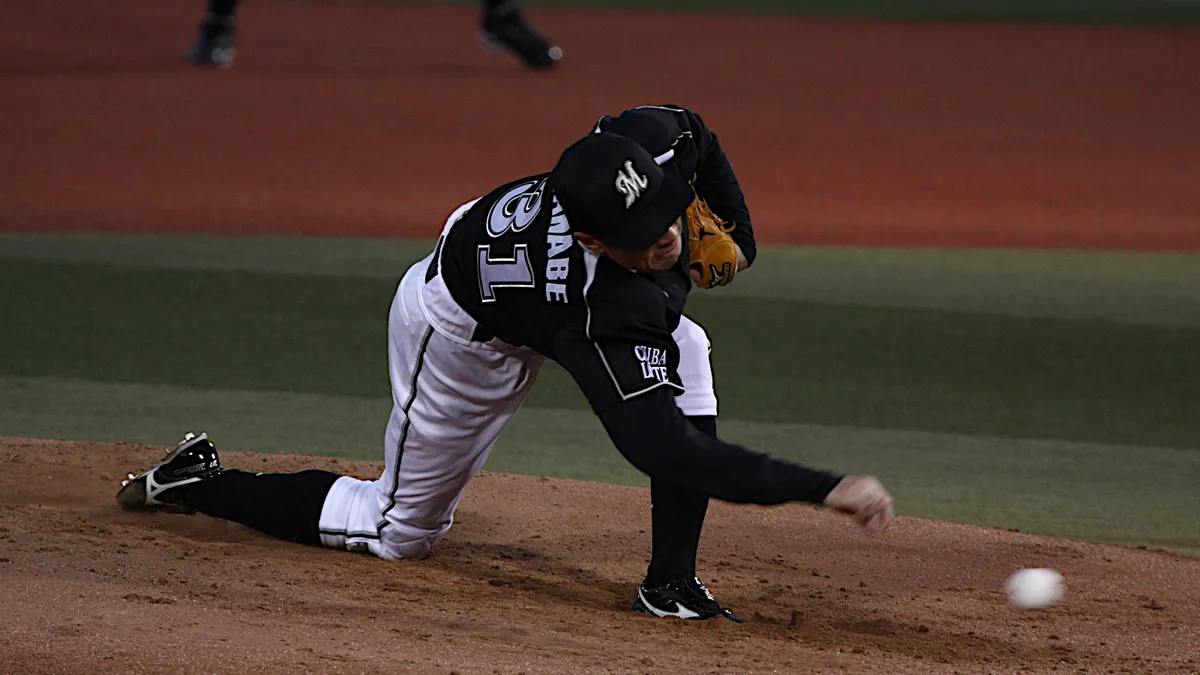
Body & healthIssue Misiorowski's 103.5 mph first pitch: what World Series record did he break?
Q. What is Tommy John surgery, and why do hard throwers need it?
The first pitch of Game 1 of the 2026 World Series left the hand at 103.5 mph, about 166.6 km/h. Pitches like that make fans gasp, then wince: can an arm really take that? What is Tommy John surgery, and why do so many hard throwers end up needing it?
The short answer: Tommy John surgery rebuilds a torn or worn-out ligament on the inside of the elbow with a tendon taken from elsewhere in the body. That ligament is stretched hard on every throw, and when the same pitcher throws faster, his elbow takes more force.
What is the UCL, and what does the surgery actually do?
On the inside of the elbow, on the pinky side, a strong band of tissue ties the upper-arm bone (humerus) to the ulna in the forearm. This is the ulnar collateral ligament, or UCL. OrthoInfo, the patient site of the American Academy of Orthopaedic Surgeons (AAOS), says its front band matters most for keeping a thrower’s elbow stable.
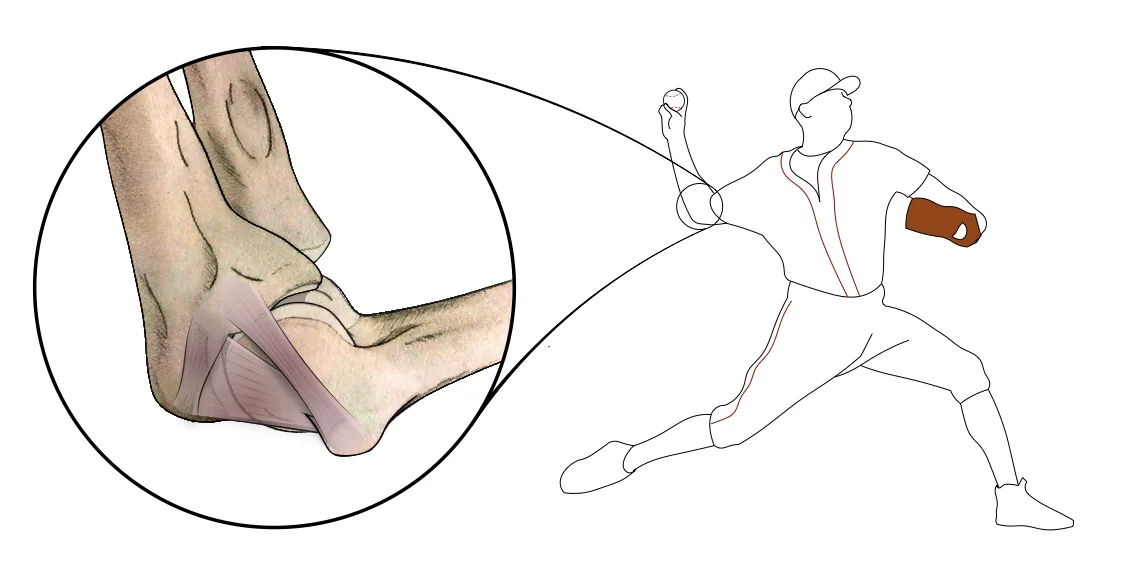
The formal name is UCL reconstruction: instead of stitching the old ligament together, the surgeon builds a new one from a tendon graft. That is usually the palmaris longus, a spare tendon in the wrist; people born without one may get a hamstring tendon instead. The graft is threaded through small tunnels drilled in the humerus and ulna. Not every UCL injury needs surgery; that is a decision to make with a doctor.
Why is it named after Tommy John?
Because he was the first. According to MLB.com, Los Angeles Dodgers left-hander Tommy John hurt his elbow in a game on July 17, 1974. When rest didn’t help, Dodgers team physician Dr. Frank Jobe operated on September 25, grafting a tendon from John’s wrist in a figure-eight through holes drilled in his ulna and humerus. It had never been done on an athlete.
John sat out 1975, returned on April 16, 1976, and won 164 games over the next 14 seasons, more than before the surgery. He died in August 2026 at 83. Today the operation is routine: a 2015 survey of 5,088 professional players found that one in four major league pitchers had had it.
Why do hard throwers tear the UCL?
Picture the moment just before release, with the arm cocked all the way back. The body drives forward while the hand and ball lag behind, bending the forearm outward and pulling the inside of the elbow open. Doctors call this valgus stress. OrthoInfo says most UCL tears come from that force repeated throw after throw, as tiny injuries add up.
A 2020 review notes that motion analysis puts the torque pulling the inner elbow open during a pitch at about 64 to 82 newton-meters (N·m), while cadaver tests on relatively young elbows put the ligament’s breaking point near 34 N·m. Taken at face value, the UCL would snap on nearly every pitch. It doesn’t, because those lab numbers leave out the force absorbed by the muscles around the elbow; the review names the forearm’s flexor-pronator muscles as the most important protectors of the inner elbow.
So is a faster pitch, like that 103.5 mph opener, riskier? A 2019 American Sports Medicine Institute study of 64 professional pitchers found that each pitcher’s faster fastballs came with clearly higher elbow torque, but the link between different pitchers was weak, as body size and mechanics vary. A 2016 study of 1,327 MLB (Major League Baseball) pitchers found velocity was the strongest predictor of who later had the surgery, yet together with body mass index and age it explained only about 7% of the variation. Throwing harder raises the load on a pitcher’s own elbow, but a hard thrower is not destined to get hurt.
How long is Tommy John surgery recovery?

OrthoInfo and Cleveland Clinic both put a full return to competition at about 12 to 18 months; the figure shows Cleveland Clinic’s stages. When the surgeon allows it, baseball players start an interval throwing program that slowly builds up how often, how far and how hard they throw.
Pro timelines can run longer. In a 2014 study of 179 MLB pitchers, 83% made it back to the majors, after an average of 20.5 months. OrthoInfo says about 80% of patients in most studies return to their previous level, and that results are much worse after a second surgery. Every recovery is different, and the medical team decides when throwing resumes.
Do pitchers throw harder after Tommy John surgery?
Plenty of people think so. In a 2012 Columbia University survey, 51% of high school players said uninjured players should have the surgery to improve performance, and 28% of players believed it would make them better than before their injury.
The evidence says otherwise. In a 2014 study of 28 MLB pitchers, velocity changes after surgery were no different from those of matched pitchers who were never hurt. Another 2014 study, of 147 pitchers, found fastball velocity fell after surgery, about as much as for uninjured pitchers of the same age. In the research so far, pitch speed does not go up on average after Tommy John surgery.
Why does the myth persist? OrthoInfo lists lost velocity as a UCL injury symptom, so a comeback measured against an injured, slowing arm can look like a speed boost. Yankees team physician Dr. Christopher Ahmad also told MLB.com that pitchers who return throwing harder owe it more to their own commitment than to the surgeon.
| Common belief | What the sources show |
|---|---|
| The surgery adds velocity | No average gain in two 2014 studies |
| Healthy arms should get it early | It treats a damaged ligament; Cleveland Clinic advises against it just for endurance |
| You’re back in a few months | About 12 to 18 months; 20.5 months on average back to MLB |
| Only pitchers hurt the UCL | Gymnasts, volleyball players and position players can too (OrthoInfo) |
Inner-elbow pain during or after throwing, lost speed or accuracy, and tingling in the ring and pinky fingers are UCL injury symptoms listed by OrthoInfo. They can have other causes, so if elbow pain keeps coming back, see a doctor.
This article is general information and does not replace a medical diagnosis or care.
In short
Tommy John surgery rebuilds a torn UCL with a tendon from elsewhere in the body; Tommy John had the first one in 1974. Harder throws load a pitcher’s own elbow more, but speed alone does not decide who gets hurt. Recovery usually takes over a year, and studies have not found that the surgery adds velocity.
More from this issue
 Misiorowski's 103.5 mph first pitch: what World Series record did he break?
 How do you convert mph to km/h, and what is 100 mph in km/h?
 Why is it called the World Series if only North American teams play?
 How is pitch speed measured: radar gun or Statcast?
 Average human reaction time: how do batters hit a 100 mph fastball?
People also ask
How long does Tommy John surgery recovery take?
Usually about 12 to 18 months before a full return to games, according to AAOS OrthoInfo and Cleveland Clinic. In a 2014 study of 179 MLB pitchers, the average time back to the majors was 20.5 months. Every recovery is different, and the surgeon decides when throwing resumes.
Does Tommy John surgery make you throw harder?
Not on average. A 2014 study found that MLB pitchers' velocity changes after the surgery were no different from those of matched pitchers who were never hurt, and another found fastball speed dipped about as much as it did for uninjured pitchers of the same age. One team physician credits pitchers who do come back throwing harder to their own commitment in rehab, not to the operation.
Why is it called Tommy John surgery?
It is named after Tommy John, the Los Angeles Dodgers left-hander who had the first operation on September 25, 1974. Dodgers team physician Dr. Frank Jobe performed it, and John returned in 1976 and won 164 more games.
Sources
- AAOS OrthoInfo - Ulnar Collateral Ligament (UCL) Injury
- Cleveland Clinic - Tommy John Surgery (UCL Surgery): What It Is & Recovery Time
- MLB.com - A look back at when Tommy John changed baseball history (2024, resurfaced 2026)
- Slowik et al. (2019), Fastball Velocity and Elbow-Varus Torque in Professional Baseball Pitchers - Journal of Athletic Training (PubMed)
- Jiang & Leland (2014), Analysis of pitching velocity in major league baseball players before and after ulnar collateral ligament reconstruction - The American Journal of Sports Medicine (PubMed)
- Smith & Bernholt (2020), Ulnar collateral ligament injury in the elbow: current trends for treatment - Annals of Joint