Issues
Q. iPhone Duo release date and price: what's new in Apple's first foldable?
Pre-orders for the iPhone Duo opened on Friday, 16 October, at 5 a.m. Pacific time. It is the first iPhone that folds, arriving 19 years after the original iPhone in 2007. It costs about two thousand dollars, takes no physical SIM (subscriber identity module) card and comes with a long spec sheet. So what exactly is new in Apple’s first foldable iPhone?
The short answer: iPhone Duo is Apple’s first foldable iPhone, a phone that opens like a book. Pre-orders opened on 16 October, and it goes on sale on 23 October in more than 70 countries, starting at $1,999 in the US. Closed, it is about the size of a passport with a 5.4-inch screen; open, it becomes a 7.6-inch screen.

When is the iPhone Duo release date?
Apple unveiled iPhone Duo on 9 September at Apple Park in Cupertino. Pre-orders opened at 5 a.m. PT on Friday, 16 October, on apple.com and in the Apple Store app, at the same moment in more than 70 countries and regions, including the US, the UK, Japan and South Korea, where it was 9 p.m. The phone goes on sale on Friday, 23 October, and 28 more countries and regions follow on 30 October.
The US store gave an early hint of how tight supply is. MacRumors reported that customers who ordered right at 5 a.m. PT will get their phones on 23 October. By 5:30 a.m., though, new orders for some configurations on Apple’s US online store showed delivery estimates in late January. Bloomberg’s Mark Gurman had said supply would be limited, after earlier reports of possible manufacturing problems and low production yield (the share of finished units that pass quality checks).
Keep in mind that this is the US store only, and shipping estimates reflect supply as well as demand, so they do not reveal sales numbers.
How much does the iPhone Duo cost?
iPhone Duo starts at $1,999 in the US, or ₩3,290,000 in South Korea. Storage options are 256GB, 512GB, 1TB and 2TB. There are two colors, star white and night sky, and the frame is grade 5 titanium (a titanium alloy made stronger with small amounts of other metals) with a mirror-polished finish.
Two accessories launched alongside it: the iPhone Duo Case, a thin two-part case that wraps both halves, for $79 (₩119,000), and the iPhone Duo Folio with Kickstand for $129 (₩199,000). Both could be ordered from 16 October.
What exactly is different about a foldable iPhone?
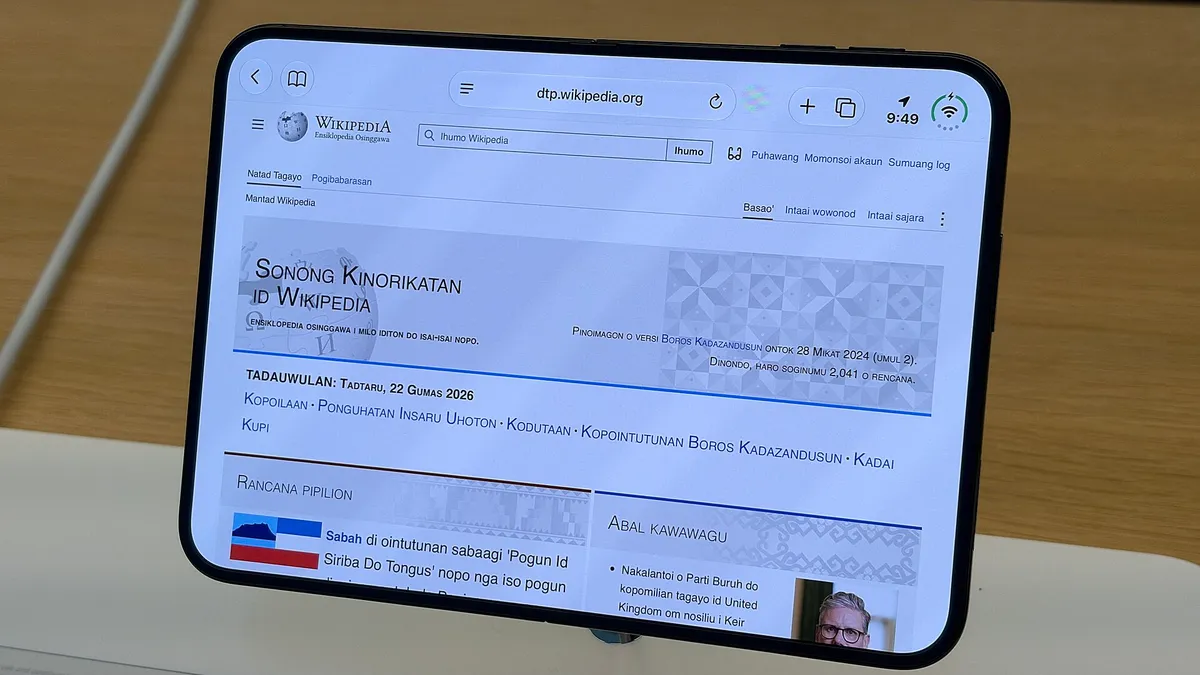
The biggest change is the screen. Closed, the outer display measures 5.4 inches (13.6cm) and offers 90 percent of the screen area of an iPhone 18 Pro. Open, the inner display measures 7.6 inches (19.3cm) and is 50 percent larger than the screen of an iPhone 18 Pro Max. Both screens share the same aspect ratio, so content simply scales up or down as you open or close the phone.
The hinge, built from more than 100 parts, holds up the middle of the display so it stays flat when open, and magnets help it close firmly. Touch ID is built into the side button, so you unlock the phone the same way whether it is open or closed. Apple’s announcement does not mention Face ID at all.
The A20 Pro is the same chip as in the iPhone 18 Pro, built on what Apple calls the latest 2-nanometer process. A custom vapor chamber (a thin sealed plate in which a liquid evaporates and condenses to spread heat) is connected directly to the chip, and Apple says the phone sustains up to 35 percent better performance than the iPhone 17 Pro. There is one battery in each half, and the eSIM-only design frees up space for battery capacity. With iOS 27, Split View lets an iPhone run two apps side by side for the first time.
| Feature | iPhone Duo |
|---|---|
| Screens | 7.6-inch (19.3cm) inner, 5.4-inch (13.6cm) outer, same aspect ratio |
| Hinge | More than 100 parts, keeps the open screen flat |
| Unlocking | Touch ID in the side button |
| SIM | eSIM only, worldwide |
| Chip and cooling | A20 Pro on a 2nm process, vapor chamber on the chip |
| Battery | One in each half, up to 31 hours of video on the inner screen |
| Water resistance | IP68 (Ingress Protection rating 68), up to 6 meters for 30 minutes (lab conditions) |
| Multitasking | Split View, two apps side by side |
Does the iPhone Duo have a crease?
This is the first thing most people ask about any foldable. Apple does not say there is no crease; it says it has made the crease harder to see.
Apple’s approach comes in layers. The inner display has a nano-texture finish, a matte surface with microscopic texture that scatters light, which cuts glare and, according to Apple, minimizes crease visibility. High-strength glass sits above and below the folding panel, and custom adhesives let the layers slide over one another like the pages of a bent book, easing the stress of each fold. A titanium plate sits underneath, and the hinge keeps the center of the screen from sagging when open.
How visible the crease really is, and how it holds up after months of folding, only reviews and everyday use after 23 October will show. For now, this is all Apple’s own description.
Words in this story
This site saves one news story at a time and branches out into the words inside it. These are the first ones worth knowing.
| Word | What it means here |
|---|---|
| eSIM | A SIM built into the phone as a chip, with your carrier’s details downloaded to it. The Duo uses nothing else |
| Crease and hinge | The faint line where a folding screen bends, and the mechanism that lets it fold. The Duo’s hinge has over 100 parts |
| IP68 | An international rating for dust and water resistance. Apple tested the Duo at 6 meters for 30 minutes |
| 2nm process | The name of a chipmaking generation. The A20 Pro is built on it |
| Vapor chamber | A thin plate in which liquid evaporates and condenses to spread heat. On the Duo it sits right on the chip |

Each word gets its own explainer, one a day, listed under “Branching out from this story” below.
In short
iPhone Duo is Apple’s first foldable iPhone: pre-orders opened on 16 October, and it goes on sale on 23 October from $1,999 (₩3,290,000 in South Korea). It brings a 7.6-inch folding screen, Touch ID in the side button and an eSIM-only design, but how visible the crease is will only become clear once people start using it.
Branching out from this story
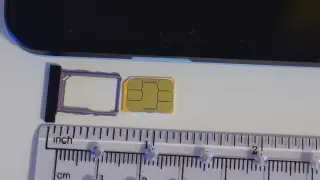 eSIM vs SIM card: what is an eSIM, and why is iPhone Duo eSIM-only?
 Why do foldable phones have a crease, and does the iPhone Duo have one?
 What does IP68 mean, and can you shower with a waterproof phone?
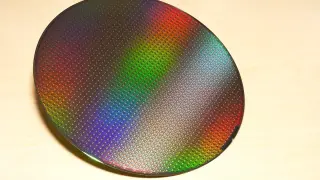 What does 2nm mean? 2nm vs 3nm, and is a 2nm chip really 2 nanometers?
 What is a vapor chamber, and how does it cool a phone?
People also ask
When is the iPhone Duo release date?
iPhone Duo goes on sale on Friday, 23 October 2026, in more than 70 countries and regions, including the US, the UK, Japan and South Korea. Pre-orders opened at 5 a.m. PT on 16 October, and 28 more countries and regions follow on 30 October.
How much does the iPhone Duo cost?
It starts at $1,999 in the US (₩3,290,000 in South Korea), with 256GB, 512GB, 1TB and 2TB storage options. The iPhone Duo Case costs $79 and the iPhone Duo Folio with Kickstand costs $129.
Does the iPhone Duo take a physical SIM card?
No. iPhone Duo is eSIM-only in every country, so you need a carrier and plan that support eSIM. Apple says the eSIM-only design frees up internal space for a bigger battery.
Sources
- Apple Newsroom - Apple unveils iPhone Duo (9 Sep 2026)
- Apple Newsroom - Open up to new possibilities with iPhone Duo: pre-orders begin Friday, October 16 (15 Oct 2026)
- MacRumors - Didn't Pre-Order an iPhone Duo Yet? Wait Times Are Significant Now (16 Oct 2026)
- Apple Newsroom Korea (Korean) - Apple unveils iPhone Duo, with South Korean prices (9 Sep 2026)