Issues
Q. OLED touchscreen MacBook Pro: release date, price and what's new?
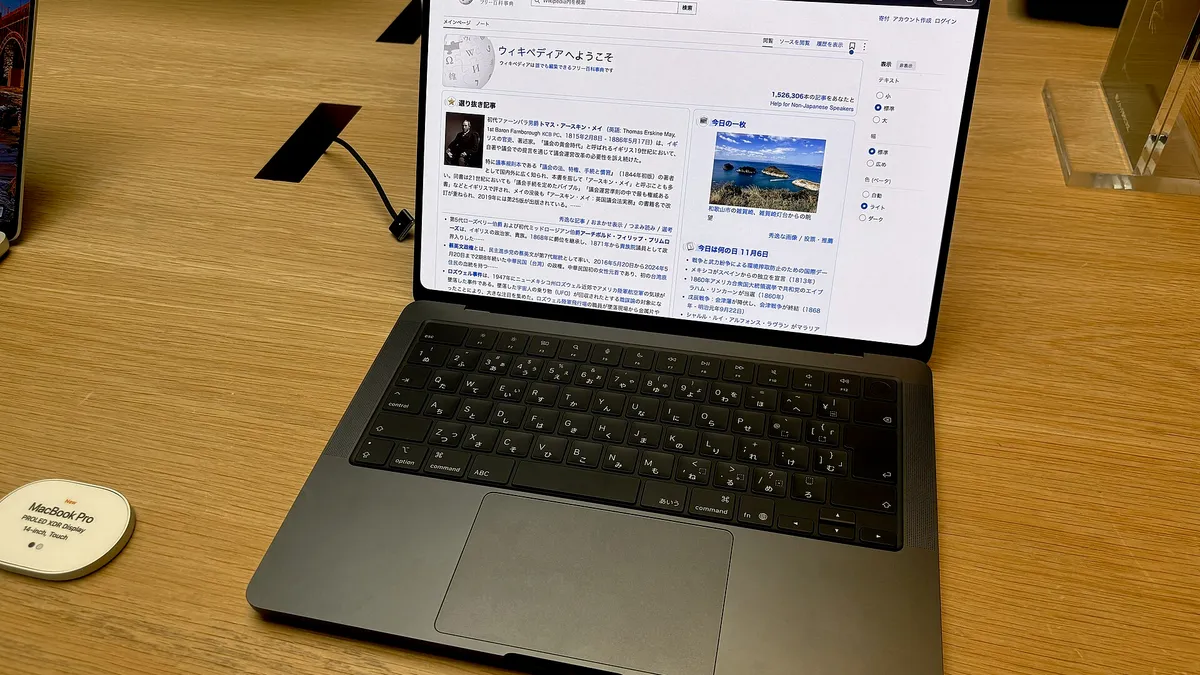
Apple has finally put a touchscreen on a Mac. The new MacBook Pro, announced on 28 October, is the first Mac you can swipe, pinch and tap, 16 years after Steve Jobs waved the idea away. It also moves to an OLED (organic light-emitting diode) screen and borrows the iPhone’s Dynamic Island, and the spec sheet is full of terms like tandem OLED and 10,000,000:1. So what exactly is new in the OLED MacBook Pro?
The short answer: the new MacBook Pro pairs a tandem OLED display, which stacks two light-emitting layers, with touch, a first for the Mac. Pre-orders opened on 28 October, and it goes on sale on 6 November, starting at $2,899 in the US.

When is the OLED MacBook Pro release date?
Apple announced the MacBook Pro with PROLED XDR Display on 28 October with a press release rather than a livestreamed keynote, and showed it to the press the same day at an event in Los Angeles. Pre-orders opened that day on apple.com and in the Apple Store app in 30 countries and regions, including the US. Deliveries begin on Friday, 6 November, the same day it goes on sale in Apple Store locations and at Apple Authorized Resellers.
South Korea followed two days later. Pre-orders opened there on 30 October, with the same 6 November release.
How much does the OLED MacBook Pro cost?
The price depends on the screen size and the chip. All figures are starting prices for the base configuration.
| Model | US | US education | South Korea | South Korea education |
|---|---|---|---|---|
| 14-inch, M5 Pro | $2,899 | $2,749 | ₩4,790,000 | ₩4,539,000 |
| 16-inch, M5 Pro | $3,399 | $3,199 | ₩5,590,000 | ₩5,259,000 |
| 14-inch, M5 Max | $4,499 | $4,199 | ₩7,590,000 | ₩7,079,000 |
| 16-inch, M5 Max | $4,799 | $4,499 | ₩8,090,000 | ₩7,579,000 |
On 26 October Apple also announced a new iPad mini with an OLED display, and on 27 October a 14-inch MacBook Pro and an iMac, both with the M6 chip. That M6 MacBook Pro keeps the Liquid Retina XDR display, has no touch and starts at $1,999. Both are new MacBook Pros, but only the PROLED XDR models have touch and OLED.
What exactly is new in the touchscreen MacBook Pro?
The display comes first. Apple calls it PROLED XDR, and it uses tandem OLED: two layers of self-illuminating pixels stacked on top of each other. Apple says this gives deep blacks without blooming, the glow that can spread around bright objects on a screen. The screens measure 14.2 and 16.3 inches. The contrast ratio is 10,000,000:1, peak brightness goes up to 2000 nits for both HDR (high dynamic range) and SDR (standard dynamic range), and ProMotion varies the refresh rate from 10Hz up to 120Hz.
Touch is the headline. The touch sensor is built into the display panel rather than layered on top, which Apple says reduces latency. Because macOS automatically translates touches into clicks, many existing apps work with touch right away. A newly designed hinge keeps the screen steadier when you press on it.
The Dynamic Island also comes to the Mac for the first time. It becomes the home for Spotlight, Live Activities and Siri AI (artificial intelligence), and a tap is enough to accept an AirDrop request or pause a song. Apple notes that Spotlight moves there only if Siri AI is available and turned on.
Under the hood are M5 Pro and M5 Max, not the M6 chip Apple announced a day earlier, with up to 128GB of unified memory. Battery life is rated at up to 24 hours, and fast charging can reach 50 percent in 30 minutes. The 14-inch model weighs 3 pounds (1.38kg), half a pound less than before, and the 16-inch weighs 4 pounds (1.82kg), 0.7 pounds less. Apple credits OLED’s more efficient display stack for making the 14-inch half a millimeter thinner and the 16-inch nearly a millimeter thinner.
Why did it take so long to get a touchscreen Mac?
The iPhone and iPad have been touch devices from day one, so why did the Mac wait? Much of the answer goes back to Steve Jobs. At Apple’s “Back to the Mac” event in October 2010, he explained why there would be no touchscreen Mac: “Touch surfaces don’t want to be vertical.” A touchscreen on an upright display looks great in a demo, he said, but holding your arm up to it soon becomes tiring, and over long sessions painful. In his view, it simply failed on ergonomics.
Apple’s next step was a touch strip, not a touchscreen. In October 2016 the MacBook Pro gained the Touch Bar, a thin Multi-Touch display that replaced the row of function keys. Users were split on it. In 2021 the new 14- and 16-inch MacBook Pro brought back physical function keys, and in October 2023 Apple discontinued the 13-inch model, the last one with a Touch Bar, seven years after the strip arrived.
So why now? Apple CEO John Ternus told Wired, as reported by MacRumors, that the Mac is still built around the trackpad and keyboard, but that there are times when touch is handy. Ternus said Apple waited until adding touch “didn’t make the product lesser in any way,” and he credited the OLED screen with getting it there. The new model did get thinner and lighter even with touch. Whether it also solves the tired-arm problem Jobs described is something only everyday use after 6 November will show.
Words in this story
This site saves one news story at a time and branches out into the words inside it. These are the first ones worth knowing.
| Word | What it means here |
|---|---|
| Tandem OLED | An OLED screen with two light-emitting layers stacked together. PROLED XDR is built this way |
| Burn-in | A faint ghost image left after a screen shows the same picture for a long time. A common OLED worry |
| Dynamic Island | The iPhone’s small space for alerts and live updates. On the Mac it also holds Spotlight and Siri AI |
| Contrast ratio | A screen’s whitest white divided by its darkest black. The new MacBook Pro is rated at 10,000,000:1 |
| Refresh rate | How many times per second a screen redraws the picture, in hertz (Hz). Here: 10Hz to 120Hz |

Each word gets its own explainer, listed under “Branching out from this story” below.
In short
The OLED MacBook Pro is the first touchscreen Mac, built around a tandem OLED display called PROLED XDR, and it goes on sale on 6 November from $2,899 (₩4,790,000 in South Korea). Sixteen years after Steve Jobs dismissed the idea, Apple says the OLED screen finally let it add touch without compromising the laptop, but how comfortable it is will only become clear once people use it.
Branching out from this story
 What is tandem OLED, and how is it different from regular OLED and mini-LED?
 What is OLED burn-in, what causes it, and how do you prevent it?
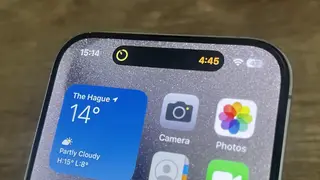 What is the Dynamic Island, and what does it do on iPhone and Mac?
 What is refresh rate, and can you see the difference between 60Hz and 120Hz?
 What is contrast ratio, and what does 10,000,000:1 really mean?
People also ask
When is the OLED MacBook Pro release date?
It goes on sale on Friday, 6 November 2026. Pre-orders opened on 28 October in 30 countries and regions, including the US. In South Korea, pre-orders opened on 30 October, with the same 6 November release.
How much does the OLED MacBook Pro cost?
In the US, the 14-inch model with M5 Pro starts at $2,899 and the 16-inch at $3,399; with M5 Max they start at $4,499 and $4,799. Education pricing starts at $2,749. In South Korea, prices start at ₩4,790,000.
Do existing Mac apps work with the touchscreen?
Many do, according to Apple, because macOS automatically translates touches into clicks. The keyboard and trackpad stay, and touch works alongside keyboard shortcuts and trackpad gestures. Developers also get updated gesture APIs to build touch-specific features.
Sources
- Apple Newsroom - Apple unveils groundbreaking MacBook Pro with PROLED XDR Display and Touch for the first time on Mac (28 Oct 2026)
- Apple Newsroom Korea (Korean) - MacBook Pro with PROLED XDR Display, with South Korean prices and dates (28 Oct 2026)
- MacRumors - Apple Executives Explain Why the MacBook Pro Finally Has a Touch Screen (28 Oct 2026)
- Engadget - HP responds to Jobs about touchscreen PCs (3 Nov 2010)
- MacRumors - Touch Bar Fully Discontinued on New MacBooks After Seven Years (31 Oct 2023)