
Science & techIssue New dwarf planet candidate 2026 ED138: what did Rubin find beyond Pluto?
Q. Who was Vera Rubin, the astronomer behind the observatory's name?
The Vera C. Rubin Observatory in Chile has just announced its first dwarf planet candidate, a world beyond Pluto. The name may ring a bell for another reason: Nvidia’s AI (artificial intelligence) chip platform is called Vera Rubin too. So who was Vera Rubin, and why do an observatory and a chip platform share her name?
The short answer: Vera Rubin (1928–2016) was an American astronomer who measured how fast stars orbit in spiral galaxies and found they move too fast to be held by the matter we can see, convincing evidence for dark matter. The observatory and Nvidia’s platform are both named in her honor. “Vera Rubin” has no hidden meaning; it is a person.

Who was Vera Rubin?
She was born Vera Florence Cooper in Philadelphia on July 23, 1928, and took the surname Rubin when she married Robert Rubin in 1948; the “C.” in the observatory’s name stands for Cooper. She earned her doctorate at Georgetown University in 1954.
In 1965 she became the first woman staff scientist at the Carnegie Institution’s DTM (Department of Terrestrial Magnetism) in Washington, and that same year the first woman officially invited to observe at Palomar Observatory. Palomar had long kept women out for lack of a women’s restroom, Carnegie Science notes, so Rubin drew a figure in a skirt, stuck it on the bathroom door and announced, “There you go; now you have a ladies’ room.” She died on December 25, 2016, at 88.
What is a galaxy rotation curve, and why did it point to dark matter?
At Carnegie, Rubin teamed up with Kent Ford, an astronomer and instrument builder. They fitted Ford’s spectrograph, which spreads light out by wavelength, to telescopes such as the 2.1-meter at Kitt Peak National Observatory in Arizona. Light from a star moving toward us shifts slightly toward blue, and from one moving away toward red (the Doppler effect), so the spectrum reveals its speed.
A rotation curve plots that orbital speed against distance from a galaxy’s center. In the solar system, where nearly all the mass sits in the Sun, outer planets orbit more slowly than inner ones, and astronomers expected galaxies, whose stars crowd toward the center, to behave the same way.
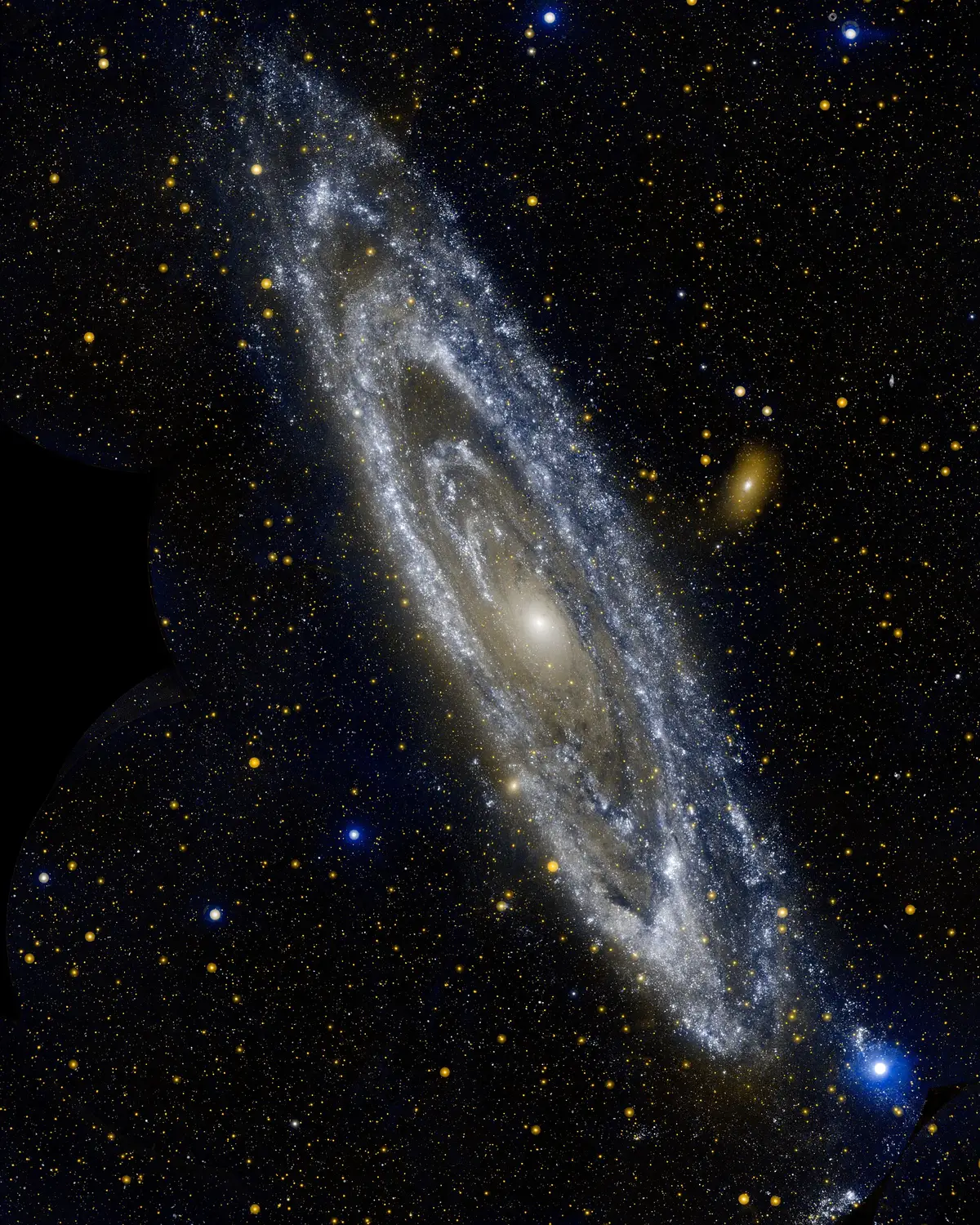
In 1970 Rubin and Ford published a rotation curve of the Andromeda galaxy that did not drop off: stars near the edge moved about as fast as stars close to the center. Skeptics wanted more, so the pair kept measuring, and in 1980 they published the same flat pattern in 21 spiral galaxies.

Just as a ball swung faster on a string needs a tighter grip, faster-orbiting stars need stronger gravity to keep them from flying off, and gravity comes from mass. The outer stars were moving too fast to be held by the stars and gas we can see, so something unseen had to supply the extra pull. Rubin and Ford concluded that galaxies hold far more mass than is visible, spread well beyond their bright disks: dark matter.
Did Vera Rubin discover dark matter?
Not single-handedly. According to the American Physical Society, Swiss astronomer Fritz Zwicky proposed unseen matter in 1933 to explain fast-moving galaxies in the Coma Cluster, but the idea was not widely accepted for almost four decades. The Royal Astronomical Society credits Rubin’s data with confirming Zwicky’s suggestion, and Rubin Observatory says her work finally convinced scientists that dark matter was real.
Dark matter makes up more than 80% of all the matter in the universe, according to Rubin Observatory, yet nobody knows what it is. Physics Today’s obituary recalls that Rubin would not even rule out that gravity itself needs changing.
She never won a Nobel Prize, but she received America’s National Medal of Science in 1993 and, in 1996, the Royal Astronomical Society’s Gold Medal, the first woman to win it since Caroline Herschel.
How did the observatory get her name?
The observatory sits on Cerro Pachón in Chile and is funded by two American agencies, the NSF (National Science Foundation) and the DOE (Department of Energy), hence the “NSF–DOE” in its full name. Its original name was the Dark Matter Telescope, and for years after that it was the LSST (Large Synoptic Survey Telescope). Congress renamed it for Rubin in a law enacted on December 20, 2019, and the new name was announced on January 6, 2020.
It was the first national observatory in the United States named in honor of a woman. Its 10-year survey kept the old initials as the LSST (Legacy Survey of Space and Time).
Is Nvidia’s Vera Rubin chip named after her too?
Yes. When Nvidia launched its Rubin platform on January 5, 2026, its press release said the name honors the American astronomer Vera Florence Cooper Rubin. Its chips include the Vera CPU (central processing unit) and the Rubin GPU (graphics processing unit), and its rack-scale systems go by the name Vera Rubin NVL72. Here is what carries her name, and what doesn’t:
| Name | What it is | Link to Vera Rubin |
|---|---|---|
| Vera C. Rubin Observatory | American observatory in Chile | Named for her by a 2019 law |
| Simonyi Survey Telescope | The telescope inside the observatory | Honors a significant private donation |
| LSST | The observatory’s 10-year sky survey | Keeps the old name’s initials |
| Nvidia Rubin platform | AI computing chip platform | Named for her, Nvidia said in January 2026 |
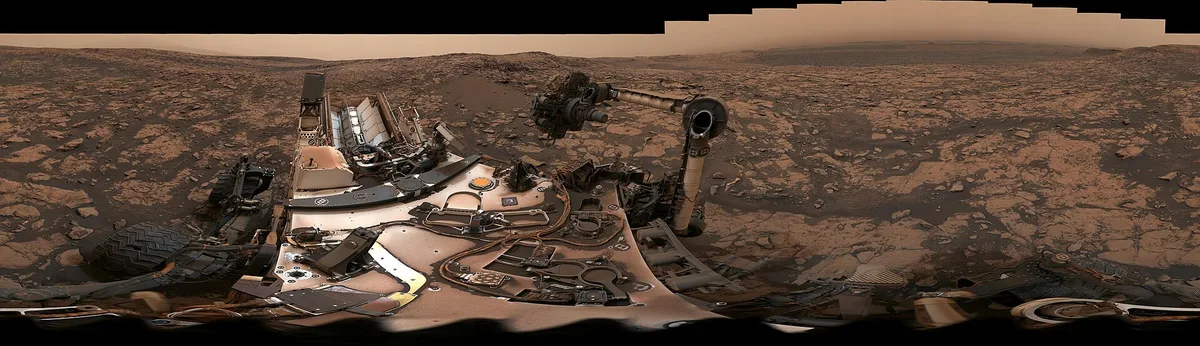
| Vera Rubin Ridge | A ridge in Gale Crater on Mars | Nicknamed for her in 2017 |
What has the Rubin Observatory just found?
On October 27, 2026, Rubin Observatory announced 2026 ED138, its first dwarf planet candidate. It is now about 46 au (astronomical units) from the Sun, 1 au being the average Earth–Sun distance, so it lies beyond Pluto’s average of about 40 au. It is estimated at 600 to 1,500 km across, but for now it is only a candidate: infrared observations are needed to pin down its size and confirm it.
It turned up in images from the LSST Camera, the largest digital camera ever built (3,200 megapixels), which scans the whole southern sky again and again. ED138 had escaped notice because it sits near the plane of the Milky Way, among millions of stars. That makes it a fitting first find for an observatory named after an astronomer who spent her career weighing what could not be seen.
In short
Vera Rubin was the American astronomer whose measurements showed that stars at the edges of spiral galaxies orbit as fast as those near the center, convincing evidence for dark matter. The Vera C. Rubin Observatory in Chile and Nvidia’s Rubin chip platform are both named after her, and the observatory has now found its first dwarf planet candidate.
More from this issue
 New dwarf planet candidate 2026 ED138: what did Rubin find beyond Pluto?
 What is a dwarf planet, and how is it different from a planet?
 Why isn't Pluto a planet anymore, and when was it demoted?
 What is the Kuiper Belt, and how is it different from the Oort Cloud?
 What is an astronomical unit (AU), and how does it compare with light-years and parsecs?
People also ask
Where is the Vera C. Rubin Observatory?
On Cerro Pachón in Chile. It is funded by two American agencies, the National Science Foundation and the Department of Energy, and its telescope has a name of its own, the Simonyi Survey Telescope. Its 10-year Legacy Survey of Space and Time began in June 2026.
Is Nvidia's Vera Rubin named after the astronomer?
Yes. When Nvidia launched its Rubin platform in January 2026, its press release said the platform was named for Vera Florence Cooper Rubin, the American astronomer. The name has no other meaning.
Did Vera Rubin discover dark matter?
Not single-handedly. Fritz Zwicky proposed unseen matter in 1933 after finding that galaxies in the Coma Cluster moved too fast. Rubin and Kent Ford's galaxy rotation measurements in the 1970s gave the convincing evidence that won astronomers over. What dark matter is remains unknown.
Sources
- Rubin Observatory - Who was Vera Rubin?
- Carnegie Science - Vera Rubin: Opening doors to dark matter and women in STEM (2024)
- Royal Astronomical Society - Vera Rubin
- Rubin Observatory - Large Synoptic Survey Telescope Named after Astronomer Vera C. Rubin (6 Jan 2020)
- NVIDIA Newsroom - NVIDIA Kicks Off the Next Generation of AI With Rubin (5 Jan 2026)
- Physics Today - Vera Cooper Rubin, obituary by Neta A. Bahcall (1 Mar 2017)
- APS News - Physics History June 2023 (Vera Rubin's 1980 dark matter paper, 11 May 2023)
- NASA JPL - PIA21717: Wide View of 'Vera Rubin Ridge' Ahead of Curiosity Mars Rover