Science & techIssue French supermarket fridges hacked to 50°C: what exactly happened?
Q. What is the cold chain, and why throw away food after a power outage?
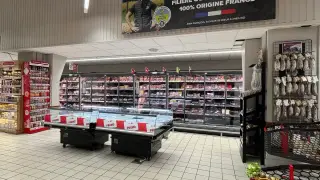
When hackers pushed French supermarket fridges up to 50°C (122°F) in October 2026, about 700 stores threw out their fresh and frozen food. Why not just chill it all again once the fridges were fixed? The answer lies in the cold chain. So what is the cold chain, and why does one warm night mean the food has to go?
The short answer: the cold chain is the unbroken run of chilled steps that keeps food or medicine at a set low temperature from the farm or factory all the way to you. If one link breaks, nobody can tell how much bacteria multiplied in the meantime, and some bacterial toxins survive chilling and even cooking, so the safe choice is to throw the food away.

What does cold chain mean, exactly?
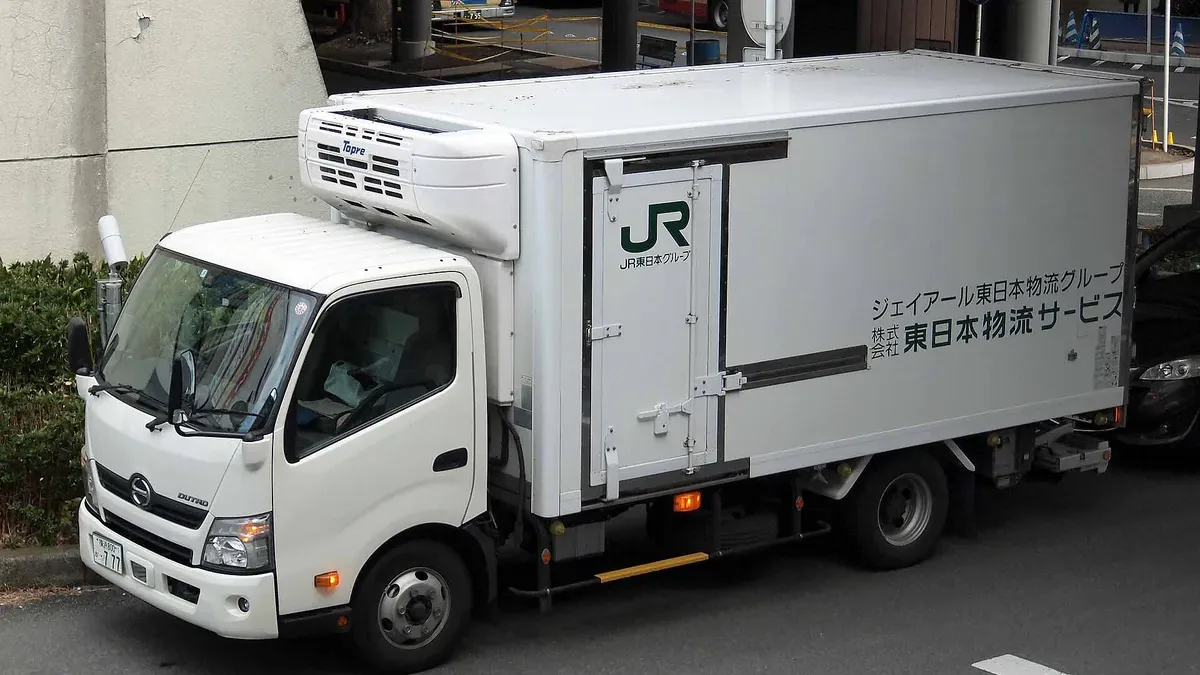
A cold chain is a temperature-controlled supply chain. The farm or factory, the cold store, the truck, the supermarket and your kitchen are joined like links in a chain, and each one has to keep the product cold. For vaccines, the US Centers for Disease Control and Prevention (CDC) says the chain runs from a cold store at the factory to the moment the vaccine is given.
The cold slows bacteria down, so food stays safe for longer. Without it, a lot goes to waste: a 2022 report by the UN’s food and environment agencies, FAO and UNEP (United Nations Environment Programme), estimated that a lack of effective refrigeration directly causes the loss of 526 million tonnes of food, 12% of global food production.
What temperatures does cold chain logistics keep?
Cold chain logistics, storing and moving goods while keeping them cold, sets different targets for different cargo. For food, the US Department of Agriculture (USDA) says a fridge should stay at 40°F (4°C) or below, and food kept constantly at 0°F (-18°C) will always be safe.
| What | Keep it at | Examples |
|---|---|---|
| Chilled food | 4°C (40°F) or below | Milk, meat, eggs, leftovers |
| Frozen food | -18°C (0°F) or below | Frozen meals, ice cream |
| Chilled vaccines | 2 to 8°C (36 to 46°F), ideally about 5°C (41°F) | Most vaccines |
| Frozen vaccines | -50 to -15°C (-58 to 5°F) | Some, such as the chickenpox vaccine |
| Ultra-cold vaccines | -90 to -60°C (-130 to -76°F) | Some COVID-19 vaccines |
Sources: USDA (food), CDC vaccine storage guidance (2026)
The last link is you: the USDA says perishable food should never sit out of the fridge for more than 2 hours, or 1 hour when it is above 90°F (32°C).
Why throw away food after a power outage?
Because of bacteria. The USDA calls the range between 40°F and 140°F (about 4°C and 60°C) the “Danger Zone”: bacteria grow fastest there, some doubling in number in as little as 20 minutes. The 50°C (122°F) reached in the French stores sits right inside it.
So why not chill the food again? Because cold doesn’t kill bacteria; it only slows them down. Even freezing just puts them into a dormant state until the food thaws. Every bacterium that multiplied while the fridge was warm is still there, and some leave toxins behind: the CDC notes that cooking can kill staph bacteria (Staphylococcus aureus) but does not destroy the toxin they make. You can’t spot the problem either, because the bacteria that cause food poisoning generally don’t change how food tastes, smells or looks, according to the USDA.

That is why the French stores threw their stock away. If you can’t be sure how warm the food got, and for how long, the rule is to throw it out. For power outages at home, the US government site FoodSafety.gov gives numbers: a fridge keeps food safe for up to 4 hours if the door stays closed, and a full freezer holds a safe temperature for about 48 hours (24 if half full). Frozen food that still has ice crystals can be refrozen, though its quality may suffer. And never taste food to check whether it’s safe.
Why are vaccines even pickier?
Vaccines are the best-known cold chain medicines. Most are kept in a fridge between 2°C and 8°C (36°F and 46°F), and the CDC advises setting the thermostat at the midpoint, about 5°C (41°F).
Unlike food, vaccines can also be ruined by too much cold. The CDC warns that a single exposure to 0°C (32°F) or colder can completely destroy a refrigerated vaccine’s potency, and lost potency cannot be restored. It says never to keep vaccines in a dorm-style fridge, the single-door kind with a small freezer box inside.
South Korea saw what a broken chain costs in 2020. In September, it halted supplies for its national flu vaccination program because some doses were suspected of being left at room temperature in transit. Tests found no safety problem, but the authorities still decided to recall about 480,000 doses, including about 270,000 that had dipped below 0°C (32°F) according to the delivery trucks’ temperature logs.
How does a cold chain system keep watch?
The heart of the system is the record. Digital data loggers, which the CDC recommends for vaccine storage, save the temperature at set intervals, so anyone can check later exactly when it went out of range. Many vaccine vials also carry a vaccine vial monitor (VVM), a small label that, as the World Health Organization (WHO) explains, changes color as heat exposure adds up and tells health workers when the vaccine should no longer be used.
Sensors that send readings over the internet let staff react from anywhere, but every connection is also a door someone else can try. In the French case, France’s cyber agency reportedly found a weakness in refrigeration software from the Danish company Danfoss, and Danfoss said the affected units were running outdated firmware, the built-in software that runs a device.
So if your cold storage is online, keep its firmware updated and change the default password. A thermometer or alarm that works without the internet lets a person spot trouble even when the system fails.
In short
The cold chain keeps food and medicine at a set low temperature at every step from production to your fridge. When a link breaks, no one can tell how much bacteria grew or whether toxins formed, so the food gets thrown out. Fridges should be at 40°F (4°C) or below, freezers at 0°F (-18°C), and most vaccines between 2°C and 8°C (36°F and 46°F).
More from this issue
 French supermarket fridges hacked to 50°C: what exactly happened?
 Celsius vs Fahrenheit: what is 50 degrees Celsius in Fahrenheit?
 What temperature should a fridge be? And the freezer?
 What is firmware, and what happens if you don't update it?
 Can smart home devices be hacked, and how do you secure them?
 Can AI hack? How far have AI cyberattacks really come?
People also ask
What does cold chain mean?
It means keeping a product, usually food or medicine, at a set low temperature at every step from where it is made to where it is used: storage, transport, the shop and finally your fridge. Each step is a link, and the chain only works if none of them breaks.
What temperature do vaccines need in the cold chain?
Most vaccines are kept in a fridge between 2°C and 8°C (36°F and 46°F), with the thermostat set near the middle, about 5°C (41°F). According to the CDC, frozen vaccines are kept between -50°C and -15°C (-58°F and 5°F), and ultra-cold ones between -90°C and -60°C (-130°F and -76°F).
Do I have to throw away all my food after a power outage?
Not right away. According to FoodSafety.gov, a fridge keeps food safe for up to 4 hours if the door stays closed, and a full freezer holds for about 48 hours (24 hours if half full). Perishable food such as meat, fish, eggs and leftovers should go after 4 hours without power, and if you can't tell how long it was warm, throw it out.
Sources
- FAO - Amid food and climate crises, investing in sustainable food cold chains crucial (FAO/UNEP report, 12 Nov 2022)
- USDA FSIS - Refrigeration & Food Safety (the 40-140°F Danger Zone)
- FoodSafety.gov - Food Safety During Power Outage
- CDC - Vaccine Storage Units: temperature ranges (Vaccine Storage and Handling Toolkit, 14 Jul 2026)
- Korea Policy Briefing (Korean) - Flu vaccines suspected of room-temperature exposure have no safety problem, 480,000 doses recalled (7 Oct 2020)